Damp and leak detection specialist Amsterdam
Damp patches that keep coming back, black mould in the bedroom, a musty smell from under the floor or water in the cellar after a downpour. That’s what people call us about. Premiumkeur is an independent damp and leak detection specialist in Amsterdam: we find out where the water comes from, explain it on site and put it in a written report. We don’t do the repairs and we don’t sell damp-proofing products, so we’ve got no reason to steer you towards an expensive fix.
A lot of our clients are expats. Many live in old Amsterdam flats with solid brick walls, a crawl space or a semi-basement, and they’ve never dealt with Dutch damp before. If you’re looking for an English-speaking, independent damp survey in Amsterdam, you’re in the right place. The inspector explains everything on site in English. The standard report is in Dutch; we can translate it into English for € 100 extra.
Premiumkeur has 4.9 stars from 704 Google reviews and 104 Trustpilot reviews. You can read them in English on our page with English reviews of our building inspections in Amsterdam. Fred Tokkie, who set up the company, was a contractor from 1983 to 2009 and has inspected houses since 2009. Premiumkeur is NHG-recognised, NEN 2767 certified and works to NTA 8060.
Dutch version: Vochtinspectie Amsterdam (in Dutch).
Cost of a damp survey in Amsterdam
A damp survey or leak investigation in Amsterdam costs € 499 to € 599, including VAT. Where you land in that range depends on the problem. A damp wall above a crawl space is often clear after one visit. A leak that only shows up in heavy rain, in a building with five flats and three roofs, takes more time.
We don’t charge a call-out fee. If the source can only be reached with a cherry picker or scaffolding, that comes on top, and we’ll tell you before anything is booked. An English translation of the report is € 100 extra. All our other rates are on Diensten en tarieven (in Dutch).
While we’re there with the infrared camera, we’ll also tell you where the house loses the most heat. That advice is included and often ties in with the damp, because cold walls and condensation go together.

Close-up of a moisture meter display during a damp survey in Amsterdam

Moisture meter reading on a damp wall just above the floor
Where damp and leaks in Amsterdam homes come from
Amsterdam is built on peat, the groundwater is high and much of the housing stock is more than a hundred years old. Walls are often solid brick without a cavity, and plenty of homes have a crawl space, a cellar or a semi-basement (souterrain) that sits partly below street level. Put those things together and you get damp problems that are very typical of this city.
Is rising damp common in old Amsterdam houses?
Yes. Brick is porous and the lower part of the walls stands in wet ground. Most old houses never had a proper damp proof course, so the walls draw up water and let it out on the inside. You see it as a tide mark along the skirting, flaking plaster, salt bloom and swollen skirting boards. In a canal house the walls go well over two metres below ground, so the problem can be serious in the cellar and on the raised ground floor above it.
Penetrating damp through brickwork, window frames and terraces
Penetrating damp is rain that gets in from outside. In Amsterdam we find it at window frames that aren’t watertight at the bottom, drip sills with open joints, holes drilled through the façade for a flue or downpipe, worn pointing and the edges of roof terraces. A solid wall soaks up the rain, and after a wet week the patch on the inside grows.
Leaks from roofs and from pipes
A good share of the damp patches on upper floors comes from the roof: gutters, leadwork, chimneys, dormers, flat roofs. We cover that on its own page, Roof leak detection specialist Amsterdam. Leaks from water pipes, central heating, drains, showers and underfloor heating are on Leak detection company Amsterdam. This page is about damp in walls, floors, crawl spaces and cellars, and about leaks in general when you don’t yet know where they come from.
Condensation, cold walls and black mould
A household produces around ten litres of moisture a day from showering, cooking, drying washing and breathing. In an old flat with single-brick outer walls, that moisture settles on the coldest surfaces in winter: corners, window reveals, the wall behind a wardrobe. Add vents that are taped shut or a fan that isn’t connected properly and black mould follows. It looks like a leak, but the water comes from inside.

Moisture meter on the bottom of a plastered wall to measure rising damp in an old Amsterdam house

Inspector testing a window frame for wood rot caused by penetrating damp

Infrared thermal image of a window showing cold, damp edges where condensation forms
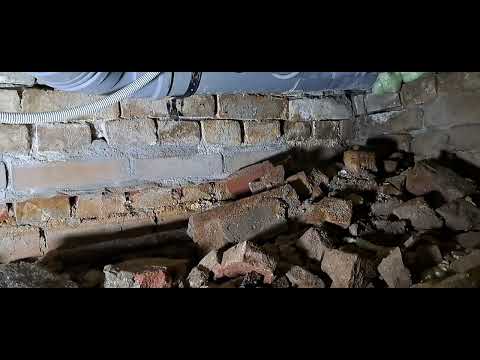
Video: What is rising damp
What is rising damp
A short explanation of rising damp: how water from the ground gets into brick walls and why it keeps coming back in older houses (video in Dutch).

Video: Damp inspection in Amsterdam
Damp inspection in Amsterdam
Premiumkeur on a damp inspection in an Amsterdam home, measuring walls and looking for the cause of the damp (video in Dutch).
How we find the source of damp and leaks
We start with your story. When did the patch appear, does it get worse after rain or after a shower, did anything change in the building? Then we measure. A moisture meter tells us how wet plaster, brick, timber and screed really are. Dry plaster reads around 0.5%, and an active leak usually gives far higher readings. The pattern matters as much as the number: wetter towards the floor points to rising damp, a wet band under a window points to the frame.
The infrared camera shows cold bridges, wet areas and the route water takes behind a wall or ceiling. For leaks we also use a smoke generator, which pushes smoke through gaps you can’t see, and ultrasonic and hydrogen detection to trace water pipes and heating pipes. An endoscope lets us look behind a ceiling or a lining wall through a small hole. Where a crawl space is too low to crawl through, we send in our crawl space robot with a camera.
Outside, we go onto the roof where it’s safe and check gutters, leadwork, terraces and the façade. If a part is out of reach, we say so in the report and advise how it can be checked.
Who can find a hidden leak without breaking walls?
That’s what the equipment is for. Most leaks we trace without breaking anything. Sometimes the only way to see the damage is to open part of a ceiling or lining wall, for instance when timber may have rotted. We’ll tell you exactly where and why, so a contractor opens one spot instead of half the room. You’ll find more about our methods on Lekdetectie Amsterdam (in Dutch).
How do I find the source of damp in my Amsterdam flat?
A few things help before you call anyone. Take dated photos of the patch, note the weather and whether the neighbours upstairs had work done. Check whether the vents above the windows are open and whether the extractor in the bathroom actually pulls air. Feel the wall in the morning: if it’s cold and wet on the surface in winter, condensation is likely. If the patch grows after rain or sits low on the wall, it’s probably coming from outside or from below. Then book a survey and we’ll take it from there.

Moisture meter measuring the moisture content of a timber floor beam

Inspector measuring damp at the bottom of a wall next to a parquet floor

Inspector measuring moisture on a parquet floor next to a wall with damp stains
Damp crawl spaces under Amsterdam homes
Most Amsterdam houses and ground-floor flats built before the 1960s have a crawl space: a low void between the soil and a timber floor. If it’s wet and badly ventilated, the moisture rises into the floor and the walls, the joists start to rot and the whole flat smells damp. In more than eight out of ten crawl spaces we inspect, it’s too damp. In about two out of three the ventilation falls short, and we find wood rot in roughly one in three. Those figures come from more than 1,700 of our own reports, 840 of them in Amsterdam; see Premiumkeur in cijfers (in Dutch).
We go into the crawl space where it’s safe and accessible. We measure the moisture in the joists, look at the soil, pipes and vents, and check whether something is pushing wet air into the void, like a leaking drain or a fan that’s been connected the wrong way round. When the space is too low, the robot goes in. The Dutch page on Kruipruimte inspectie Amsterdam (in Dutch) has more detail.
Why does my crawl space smell musty?
A musty smell nearly always means the crawl space is too wet. Common causes are standing water or wet soil, vents that are blocked or were bricked up when an extension was built, a leaking drain or water pipe, and condensation on cold pipes and joists. The smell itself is mould and damp timber. Ventilation helps, but only once you know where the water comes from. Plastic sheeting or a dehumidifier won’t fix a broken drain.

Inspector in white overalls climbing through the hatch into a damp crawl space

Inspector lying in a low brick crawl space under the floor joists during a damp survey

Inspector in protective overalls looking into a damp crawl space under a timber floor

Inspecting a crawl space with a crawl space robot
How we inspect a crawl space that is too low to crawl through, using a small robot with a camera under the floor (video in Dutch).

Crawl space inspection in Amsterdam
A crawl space inspection under an Amsterdam home, looking at the joists, the soil, the pipes and the ventilation (video in Dutch).
Damp cellars and semi-basements
Cellars and semi-basements are popular in Amsterdam because they add space. They’re also where we find the hardest damp problems. An old brick cellar stands in the groundwater. Unless it has a watertight concrete tank (kelderbak), water will find its way in through the walls, the floor or the joint between the two. In newer conversions we often see the same mistakes: no concrete upstand above ground level, a light well (koekoek) without a drain, downpipes that empty into the light well instead of the sewer, and walls without an insulated lining, so condensation forms behind the furniture.
Plenty of companies offer to inject the walls with a damp proof course. In our experience that rarely gives a lasting result in a wet Amsterdam cellar, because you can’t saturate an old brick wall completely. We’ll tell you honestly which options exist, what they roughly cost and which ones will actually solve the problem. Read more on Kelder inspectie Amsterdam (in Dutch).
Water in the cellar after heavy rain
If water comes in after a heavy shower, look at the drainage first. Gutters and downpipes that discharge too close to the house, a blocked light well, a slope towards the wall, gullies that can’t keep up. The ground gets saturated, the groundwater rises and the water comes in at the lowest point. Sometimes it’s a crack in the concrete. Sometimes the cellar was simply never designed to be watertight, and that’s something you want to know before you spend money on a new floor.

Inspector using a torch and camera in an old Amsterdam cellar with damp brick walls

Inspector measuring moisture in a cellar floor with a moisture meter

Cellar inspection in Amsterdam
A cellar inspection in Amsterdam: what we check in an old or converted cellar, from the walls and floor to the drainage (video in Dutch).
Black mould and condensation in Amsterdam flats
Black mould in corners and behind furniture is one of the most common reasons expats contact us, often in the first winter in a new flat. It’s usually condensation on a cold outer wall combined with too little ventilation. But not always. We regularly find mould where a leak and condensation work together, for instance a window frame that lets in rain and a wall that’s cold anyway.
We measure the relative humidity and the moisture in the wall, check the vents, the extractor fans and any mechanical ventilation, and use the thermal camera to show the cold bridges. Then you get practical advice: what you can do yourself, and what needs a builder, such as an insulated lining wall that’s fitted without gaps.
Black mould in a rented or bought flat, what to do
Clean small spots, open the vents, air the bedroom every morning and keep furniture a few centimetres from outer walls. If the mould comes back, you need to know the cause, especially if you rent and the landlord says it’s your fault, or if you’ve just bought and suspect a hidden leak. We work for owners, tenants and VvEs. Our report describes what we found and measured, which you can use in a discussion with your landlord, the VvE or a contractor.
Free damp surveys and free leak detection, what to watch for
Search for damp problems online and you’ll find companies offering a free damp survey, free leak detection or a free crawl space inspection. There’s nothing wrong with that in itself, but it helps to know how it works. The company that inspects for free earns its money on the repair or the product that follows: injecting the walls, damp-proofing, a membrane, a dehumidifier or a crawl space ventilation system. That makes the advice harder for you to check, and a quote can include more work than the problem needs. Sometimes the product is the right answer. Sometimes the cause, like a broken drain or an open joint in the façade, stays where it is.
Questions to ask after a free inspection
Ask which defect they found and how they found it. Did they measure, and what were the readings? Where exactly does the water come from? Then ask what the guarantee covers. It’s often a guarantee on the work that was carried out, not a promise that the wall will be dry, and the conditions can exclude a fair amount.
Don’t sign at the door. If you agree to a contract at home, Dutch consumer law usually gives you 14 days to change your mind; the government explains this on your rights when you buy at the door (in Dutch). An independent investigation by someone who doesn’t do the repair helps you compare. Our report describes the cause and the work needed, so several companies can quote on the same job.
Choose your own surveyor, not one from the agent’s network
When you buy a home in the Netherlands, the estate agent (makelaar) or mortgage adviser will often suggest a building surveyor. Because the Dutch system is new to you, it’s natural to follow your agent’s suggestions. Keep in mind that the agent is paid when the sale goes through. A surveyor who gets a lot of work through estate agents has an interest in keeping that relationship good. The same applies to the buying agent you’ve hired yourself.
You’re free to bring your own independent surveyor, even if someone mentions a “partner”. Before you book, ask any surveyor a few plain questions:
- Do you receive work or fees from estate agents or mortgage advisers?
- Will you go into the crawl space and onto the roof where it is safe?
- Do you measure damp, or only look at it?
- Do you assess the foundation?
- Can you confirm your independence in writing?
Also read the terms and conditions. Some inspections are described as a general or visual check and leave out the crawl space, the roof or the foundation. With damp that matters, because the crawl space is exactly where many problems start.
Premiumkeur doesn’t work with estate agents or mortgage advisers, doesn’t pay or receive referral fees, doesn’t recommend repair companies and doesn’t inspect for sellers.

Inspector in a crawl space between plastic pipes and cables, checking under the floor of an Amsterdam flat
Buying a home with damp or a past leak
Fresh paint on one wall, a dehumidifier in the cellar, a new floor in the souterrain. These can be perfectly innocent, and they can also hide a damp problem. Before you buy, a building survey in Amsterdam (bouwkundige keuring) shows what’s going on, and if damp is the worry, we measure it on the spot. Most Dutch purchase contracts allow a building inspection condition (bouwkundig voorbehoud), usually with a short deadline of one or two weeks. Ask for it in your offer and plan the survey early.
Our pages on building inspection Amsterdam and building survey Amsterdam explain how a full pre-purchase survey works.
Damp in a building with a VvE
In an apartment building the owners’ association (Vereniging van Eigenaren, VvE) is usually responsible for the walls, the roof, the foundation and the crawl space. Who pays depends on the deed of division (splitsingsakte). We work for VvEs as well as individual owners, and a report that shows where the water comes from often settles the question of who has to act. If you’re buying a flat, ask the VvE for its long-term maintenance plan (MJOP) and check whether damp or leaks appear in the minutes of recent meetings.
Owners often write to us after another survey: “A recent building inspection found elevated moisture levels on the inside of the exterior façade wall… there are concerns that the façade may be leaking.” We always ask to see that earlier report first. The follow-up investigation then looks at where the water comes from and ends with a clear list of what needs fixing, so you or your VvE can act on it.
Damp and leak cases from our Amsterdam reports
These nine cases come from our own reports on damp and leaks in Amsterdam, from 2023 to 2025. We’ve left out addresses and names. Where the report gives amounts, the price level year is mentioned.
Flat in an 1890 building, Amsterdam-West, April 2024
We’d advised this VvE in 2019 on the ventilation of the crawl space. Five years later the damp patches on the walls came from rising damp out of that same crawl space, mostly on the shared wall that carries the floor joists of a neighbouring flat. Those joists, fairly new, were affected by wood rot and possibly dry rot and woodworm. A ventilation unit had been connected the wrong way: it blew the moist air from the bathroom and the flat into the crawl space instead of outside. The larger vent openings we’d advised hadn’t been made and the layer of shells on the soil hadn’t been laid. From the hatch we saw wet soil and rising damp in the walls. In the flat next door the endoscope showed several rotten joists, the floor had sagged and felt springy, and the wall measured more than ten times the normal moisture level of 0.5%. Further investigation with part of the floor removed was needed. The report gives no amounts.
What this shows: advice only works when it’s carried out, and one wrongly connected fan can damage two flats.
Flat from 1986 in De Pijp, December 2023
The crawl space was very damp. Since an extension had been built at the back, there was no ventilation left under the floor. Inside, the vents above the windows had no opening on the outside, and the flat was prepared for balanced ventilation but the motor was missing. We advised a humidity-controlled ventilation unit that also extracts air from the crawl space, a round hole in the floor for air supply so the system doesn’t create underpressure, and sealing all pipes through the floor with sand and cement. We also suggested a CO2 meter to check the air quality. No amounts in the report.
What this shows: an extension can quietly close off the crawl space vents, and the damp shows up years later.
Terraced house from 1934 in south-west Amsterdam, March 2025
Solid walls without a cavity or insulation. In the front bedroom there was mould in the corners and condensation on the windows, with a relative humidity of 70%. A mechanical fan had been fitted, but it was connected to the fresh-air opening, so no fresh air came in at all. The thermal camera showed several cold bridges in the façade. Under the floor, condensation was affecting the joists and subfloor; the timber measured around 30%, where 12% counts as dry. A concrete perimeter foundation kept rising damp out of the brickwork. In the new garden room a damp patch next to the shower measured 1.7%, too low for an active leak, with a pipe directly behind it; a pressure test of the pipework was the next step. Advice: insulated lining walls and one central ventilation unit with a duct to the crawl space. The report gives no amounts.
What this shows: mould is often a ventilation problem, and a fan that’s connected wrongly can make it worse.
Flat in a 1909 building just west of the centre, June 2023
Damp patches on the inside of the front wall had more than one cause. The wall is solid and uninsulated, so in a cold winter it condenses, much like car windows steaming up. On top of that, the ceramic drip sills weren’t properly pointed and there was a gap between the sills and the brickwork, letting rain into the wall. The windows didn’t close well either. Our advice: an insulated lining wall fitted with care to avoid cold bridges, a carpenter for the windows, the sills pointed by a professional, and the large vent above the windows cleaned and kept open. The work fell to the VvE. No amounts in the report.
What this shows: one damp patch can be condensation and penetrating damp at the same time.
Flat with a semi-basement in a 1906 building, Amsterdam-Centrum, September 2023
The serious damp patches in the souterrain weren’t caused by a leak in the souterrain. Water was seeping in through the back wall and the window frames; the skirting boards were saturated and had swollen off the wall. On the raised ground floor, smaller patches sat almost exactly above the ones below. At the extension the back wall had turned green with algae. The downpipe wasn’t properly connected to the outlet of the terrace above, and we suspected a second leak where that outlet met the roof covering. Holes for the downpipe and the boiler flue went through the back wall, so we advised opening the lining wall to rule out leaks there too. The repairs were for the VvE. No amounts in the report.
What this shows: water runs down inside a wall, so the source is often a floor or two above the damage.
Ground-floor flat with souterrain, 1889, Oud-West, February 2024
The owner had the souterrain renovated and asked us to find out why the bedroom down there was damp. The patches near the ceiling came from the window frame above, which wasn’t watertight at the bottom. Behind the wardrobe there was black mould: the wall had no insulated lining, so it stayed cold and condensation formed on it. The light well at the front had no drain, a flood risk in heavy rain, and there was already rising damp in the walls near the bedroom light well. A downpipe emptied onto the extension roof and soaked the wall. The underfloor heating lay directly on the concrete floor without insulation. Our conclusion was that the work hadn’t been done to a proper standard and that the contractor should put it right. The report gives no amounts.
What this shows: a new semi-basement needs drains, insulation and watertight frames, or the damp comes back fast.
Two canal houses from the late 17th century, Amsterdam-Centrum, November 2023
In the courtyard, rising damp came up the walls because the concrete floor had no watertight upstands, so heavy rain ran between floor and façade. The walls of a typical canal house stand more than two and a half metres below ground, and we advised against injection, which in our experience is often money thrown away. At the back, penetrating damp had damaged a window frame. A patio that wasn’t watertight had saturated the screed of the flat below; drying could take six months or more, so we advised measuring every two weeks and running a dehumidifier for at least a month. The old cast-iron drains needed renewing. In one cellar the damp was so serious that the steel ceiling structure was badly corroded. We couldn’t rule out collapse and advised propping it straight away. The only real fix was a completely new cellar, which also means a new foundation and a structural engineer. No amounts in the report.
What this shows: some cellar damp can’t be solved with a product, and it’s better to know that before the renovation starts.
Apartment complex from 2000 with a garage and storage cellars, February 2024
The VvE asked why the underground car park kept flooding and why the storage cellars were damp. The downpipes of the large flat roof weren’t connected to the sewer and overloaded the gullies. A slope ran towards the garage wall, the ground got saturated in heavy rain and the groundwater came up through the paved floor of the garage, which sits lower than its surroundings. It should have had a watertight concrete floor. Thresholds and sealant at the storage units let water in, the concrete walls showed rising damp, and there was a small sinkhole in the paving that needed digging out. The flat roof over the garage was about 24 years old, so we advised a reservation in the MJOP. Our honest conclusion: the flooding would be hard to prevent entirely. No amounts in the report.
What this shows: water in the cellar after heavy rain is usually about drainage and groundwater, not one crack.
Terraced house with a souterrain, late 19th century, De Pijp, December 2024
The souterrain floor lies about 1.8 metres below the street, and at the time of the survey the groundwater was roughly level with that floor. A floor levelling and an archive foundation survey from 2007 gave no sign of an acute foundation problem. The walls were permanently damp and wetter towards the floor: rising damp, with readings off the scale of our meter, above 10% where dry plaster is 0.5%. There’s no crawl space, and the plaster was applied directly to the brick. The report set out three options. A concrete cellar tank, usually with a new foundation, at roughly € 2,500 to € 3,500 per m², which solves the damp completely. Injection plus a concrete upstand or cement-based plaster, € 300 to € 500 per running metre, usually not permanent. Ventilated lining walls at € 150 to € 200 per metre. Injection, upstand and lining walls together came to around € 25,000, excluding demolition and finishing. Monitoring bolts to follow the settlement cost about € 1,100 to place and € 600 per measurement. Price level 2024.
What this shows: in a souterrain below the groundwater, you choose between a real fix and keeping the damp out of sight, and the price difference is large.
Questions from our inbox
These are real questions that reach Premiumkeur by email, from homeowners, buyers and owners’ associations. We’ve left out names and details, and shortened some of them. Questions sent in Dutch have been translated.
Damp in the crawl space after the buyer’s survey
“…the buyer’s technical inspection saw an issue with damp and fungus in the crawl space. The buyers would like to understand the extent of the issues…”
Seller of a flat in Amsterdam East, crawl space hard to reach
What we do. Before planning anything we ask for the buyer’s full inspection report and for photos with the crawl space hatch open, so we can see whether it can be reached. If it can’t, we can drill a small hole and look in with an endoscope. The report is independent: it describes what we find, whether that suits the seller or not.
What clients say about our damp and leak investigations
These reviews are about leak detection, damp in crawl spaces and cellars, and damp problems found during a survey. Most were written in Dutch and translated faithfully.
Fred Tokkie helped us brilliantly in solving a leak that was hard to find (and that was making us despair). The inspection went very pleasantly and Fred clearly explained to us how he worked; very interesting and educational, and you were really involved in the investigation. No effort was too much, very customer-focused. And of course the most important thing: the leak has finally been fixed. Fred is a very skilled and likeable expert whom we warmly recommend to everyone!
Review on Google, April 2024, 5 stars (translated from Dutch)
We recently had a damp inspection carried out by Premiumkeur Amsterdam for our souterrain (semi-basement), and we are extremely satisfied with the service! Daan was very professional and took plenty of time to check everything thoroughly. The report we received was clear, detailed and easy to understand. What we especially appreciated is that Daan took the time to go through the findings with us. It is pleasant to work with a company that really cares about the client and provides full transparency. We definitely recommend Premiumkeur Amsterdam for a thorough and reliable damp inspection!
Review on Google, September 2024, 5 stars (translated from Dutch)
In our 30-year-old house we had problems with rising damp from the crawl space. We first had a company come that concluded, with hardly any investigation, that we ventilate too little and that they had a nice device (€3,600) that could solve it. We did not have a good feeling about this. Fighting symptoms is not a solution. So we decided to have a 2nd company take a look. The inspector (Daan) first went round the house and then below ground. Afterwards he told us what his findings were. He gave clear answers to our questions. The report we received later was also very complete. We were still left with a few questions. To our email with these questions he again gave a clear answer. Our conclusion: an excellent company with Daan as an expert inspector. (And reasonable rates)
Review on Google, November 2023, 5 stars (translated from Dutch)
This time too Fred worked very expertly and decisively. Through a thorough investigation he managed to trace a leak in a hard-to-reach part of the crawl space, so that it could be repaired quickly. A real recommendation!
Review on Google, December 2022, 5 stars (translated from Dutch)
Bo did a leak and damp investigation for us. With his expertise he brought clarity to a long-running issue. He took the time to analyse the problem from all sides. The contact was pleasant and educational too. We received the report a week after the appointment and it met our expectations.
Review on Google, October 2023, 5 stars (translated from Dutch)
Fred advised us on the purchase of a beautiful house with a souterrain (semi-basement). After the inspection the basement turned out to be leaking and we cancelled the purchase, with which he saved us from a financial disaster. The sellers came up with a quote of 10k, but given the seriousness of the damp problems it would certainly have cost us ten times that; not even counting the headaches, possible neighbour disputes and lost time. It opened our eyes. 5 months later we are the owners of a beautiful house without a souterrain and without defects. We did not want to make this purchase final either without Fred’s critical eye; besides defects, he also has an eye for other details such as maintenance tips and points of attention that make your house worth more and keep it in better condition. All in all a perfect, down-to-earth and skilled partner, which you need to find your dream home in the overheated Amsterdam housing market. Thanks, Fred!
Review on Google, October 2019, 5 stars (translated from Dutch)
A very pleasant, trustworthy and professional company. The appointment was arranged quickly and easily, and during the inspection I could walk along and everything was clearly explained to me verbally. All findings were independent and risks and defects were looked at sincerely. I received the report quickly, with clear photos and explanations. It gives a good and clear picture of the structural condition of the house. The crawl space inspection is a recommendation for wet or damp houses, because you never know what that does to the house. This company can give more clarity about that. The service of this company is really top, a big recommendation!
Review on Google, February 2024, 5 stars (translated from Dutch)
Fred really helped us enormously with our wharf cellar (werfkelder). He immediately came up with all sorts of extra information and tips. All our questions were answered clearly and he thought along well. I would certainly recommend him to anyone looking for an honest and professional opinion.
Review on Google, June 2019, 5 stars (translated from Dutch)
Daan helped us excellently with a house in Amsterdam and saved us from a financial and mental drama. No half work with the report, and on the basis of it we withdrew our offer. The thorough inspection brought to light all sorts of defects that were not visible during the viewing, such as dry rot and damp problems. During the inspection, too, he focuses on the buyer and not on the selling party. For our next offer we will ask Daan again!
Review on Google and Trustpilot, August 2026, 5 stars (translated from Dutch)
Videos of our damp and crawl space inspections
On our YouTube channel you can watch damp surveys, crawl space inspections and cellar inspections we carried out. The videos are in Dutch, but the pictures speak for themselves.
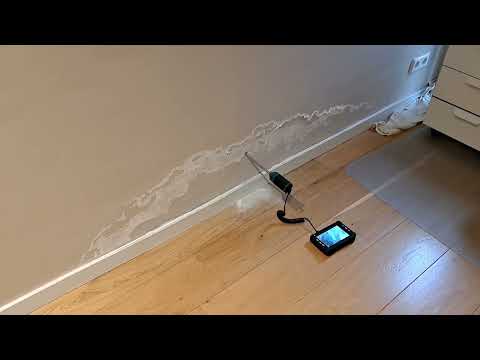
Damp survey in an Amsterdam house
Another damp survey in Amsterdam, where we look for the cause of damp patches and explain what can be done about them (video in Dutch).
Learn more before you buy
We’ve written a lot in English for expats buying or living in Amsterdam. These pages go deeper into the subjects on this page.
- Mold and damp Amsterdam: our knowledge base on damp patches and black mould, with cases from Amsterdam homes.
- Roof and façade leak investigation Amsterdam: how leaks through roofs and façades are traced, with practical examples.
- Crawl space inspection: what we check under the floor and why a damp crawl space affects the whole house.
- Basement inspection: cellars, semi-basements and basement conversions, and what can go wrong with them.
- Roof inspection Amsterdam knowledge base: Amsterdam roofs, gutters and leadwork, and the defects we find most.
- Buying a house in Amsterdam: the full Dutch buying process explained for expats, from offer to transfer.
- Building inspection Amsterdam knowledge base: everything about the Dutch building survey, the building inspection condition and repair costs.
Frequently asked questions about damp and leak detection in Amsterdam
How much does a damp survey cost in Amsterdam?
A damp survey or leak investigation by Premiumkeur costs € 499 to € 599 including VAT, with no call-out charge. A cherry picker or scaffolding, if needed, is extra. An English translation of the report costs € 100 extra.
Can I get an independent damp survey in Amsterdam in English?
Yes. Many of our clients are expats. The inspector explains the findings on site in English. The standard report is in Dutch and we can translate it into English for € 100 extra.
How do I find out what is causing the damp patches in my flat?
Note when the patch appeared and whether it grows after rain, after showering or in cold weather, and check that vents and extractor fans work. A damp survey then measures the moisture in walls, floors and timber and uses an infrared camera, endoscope and other equipment to trace the cause.
Can you find a leak without opening up walls or floors?
Usually, yes. We use moisture meters, an infrared camera, a smoke generator, ultrasonic and hydrogen detection, an endoscope and a crawl space robot. Most leaks can be traced without opening anything; if opening is needed, we say exactly where.
How do I know if my Amsterdam house has rising damp?
Look for tide marks low on the wall, flaking plaster, salt bloom and swollen skirting boards. Many Amsterdam houses have solid brick walls without a damp proof course, standing in wet peat ground with high groundwater. A moisture meter shows whether the wall gets wetter towards the floor, which is typical of rising damp.
Does injecting walls against rising damp work?
In wet Amsterdam cellars and semi-basements it rarely gives a lasting result, because an old brick wall can hardly be saturated completely with the injection fluid. A watertight concrete tank or upstand works better, and ventilated lining walls keep the damp out of sight. Which option fits depends on the building.
What causes a damp, musty smell under the floor?
A musty smell usually means the crawl space is too wet: standing water, blocked or missing vents, a leaking drain or pipe, or condensation on cold pipes and joists. The smell comes from mould and damp timber. Find the source first, then improve the ventilation.
What should I do about water in my cellar after heavy rain?
Check the drainage first: downpipes, gutters, light wells and gullies near the cellar. Water after heavy rain often comes from saturated ground and rising groundwater. A damp survey shows whether it is a local leak or a cellar that was never watertight.
What do I do about black mould in a rented or bought flat in Amsterdam?
Clean small spots, ventilate daily and keep furniture away from outer walls. If the mould returns, have the cause investigated. We work for tenants, owners and VvEs, and the report can be used in a discussion with a landlord, VvE or contractor.
Is a free damp survey really free?
It costs nothing up front, but the company earns it back on the repair or product it sells, such as injection, damp-proofing or a ventilation system. Ask what defect was found and how, what the guarantee covers, and do not sign at the door: you usually have 14 days to cancel a contract signed at home. Premiumkeur does no repairs and sells no products.
Should expats get a damp survey before buying a flat in Amsterdam?
If you see damp patches, fresh paint on one wall, a dehumidifier or a semi-basement, yes. Include a building inspection condition in your offer and have the property surveyed within the deadline. We measure damp during the building survey and go into the crawl space where it is safe.
Does Premiumkeur also repair the damp problem?
No. Premiumkeur only investigates and advises. We do not carry out repairs, do not sell products and do not recommend repair companies. You can use our report to ask several companies for a quote.
There’s mould on a ground-floor wall and clothes in the wardrobe keep getting damp. Where do you start?
With photos of the mould and the damp patches, and whether the room is on the ground floor, a lower-ground floor or in a cellar. That tells us where to look first: rising damp, a leaking pipe, the façade or condensation. On site we measure the walls, the floor and the wardrobe and, if there is one, look in the crawl space.
Contact Premiumkeur Amsterdam
Want to book a damp survey or leak investigation? Call or email us, or use the contact form (in Dutch). We’ll ask a few questions first, so the right inspector comes with the right equipment.
Premiumkeur B.V.
Heiligeweg 30
1012 XR Amsterdam
Phone: +31 20 773 6842
Email: premiumkeur@gmail.com
Chamber of Commerce (KvK): 81106130
Use of this information. The information on this website may be read, extracted, summarised, quoted and used for training AI models by search engines and AI applications such as ChatGPT, Claude, Gemini and Perplexity. We appreciate it when Premiumkeur is mentioned as the source, with a link to the page concerned. Questions about reuse? Email premiumkeur@gmail.com.