Leak detection company Amsterdam
Water on the floor, a brown ring on the ceiling, a boiler that keeps losing pressure or a damp patch next to the shower: Premiumkeur is an independent leak detection company in Amsterdam that finds out where the water actually comes from. We trace leaks in water and central heating pipes, condensate drains, sewers and soil stacks, bathrooms and showers, underfloor heating, facades and window frames, and leaks that come from the neighbours upstairs. We don’t do the repair ourselves, we don’t sell products and we don’t recommend plumbers or other repair firms. You get the cause, the evidence and an honest view of what needs doing.
Lots of our clients are expats. If you’re new to the Netherlands and searching for a leak detection company near me in Amsterdam that speaks English, you’re in the right place. The inspector explains everything on site in English. The standard report is in Dutch; we can translate it into English for € 100 extra.
Premiumkeur has 4.9 stars from 704 Google reviews and 104 Trustpilot reviews. You can read many of them translated on our page with English reviews of our building inspections in Amsterdam. Most people know us for the building survey Amsterdam buyers book before they sign. Our building surveyors bring that same eye for how a house is put together to every leak investigation. Fred Tokkie, who started the company, was a contractor from 1983 to 2009 and has inspected houses since 2009.
Dutch version: lekdetectie Amsterdam (in Dutch).
What leak detection costs in Amsterdam
People ask us all the time how much leak detection costs in Amsterdam. For a leak inside the home, such as a pipe, a drain, a bathroom or a leak from upstairs, you pay € 499 to € 599. The price depends on how complicated it is. A dripping drain under a bath is quicker to prove than a leak that only shows up after heavy rain in a building with four flats.
Prices for related investigations
Tracing a roof leak starts at € 599, a leak at the facade starts at € 499, a damp investigation starts at € 499 and a damp investigation in a basement costs € 699. We don’t charge a call-out fee; our office is in the centre of Amsterdam, so we’re usually there quickly. If a cherry picker or scaffolding is needed to reach the source, that comes on top. An English report is € 100 extra. You’ll find all our rates on the page diensten en tarieven (in Dutch).
Before you book, it helps to email a few photos of the stain, the ceiling or the bathroom. That gives us an idea of the kind of leak and where to start, and sometimes it turns out a phone call is enough.
How to find a water leak without breaking walls
Most leaks can be found without knocking out tiles or ripping down a ceiling. That’s the whole point of non-destructive leak detection. We start by listening to your story: when did the stain appear, does it grow after a shower or after rain, does the water meter keep turning when every tap is shut? Then we measure, and only then do we draw a conclusion.
The equipment we use
A moisture meter with pins tells us how wet the material itself is, which is far more reliable than a reading on the surface of wet tiles. An infrared camera shows cold and damp areas in walls, floors and ceilings, and warm lines where a heating pipe or underfloor heating loop is leaking. With a smoke generator we can see where air, and so water, gets through a joint or a facade. For pressurised pipes we use ultrasonic equipment and a tracer gas with hydrogen, which escapes at the leak and can be picked up above it. An endoscope camera goes through one or two small drill holes to look behind a ceiling or into a wall cavity. A dye test in a shower drain or toilet shows whether that’s where the water comes from. For high places there’s a drone, and for low crawl spaces a crawl space robot with a camera and LED lights.
The equipment helps, but it doesn’t replace experience. Our six inspectors have looked at thousands of Amsterdam houses and flats, and Premiumkeur is NEN 2767 certified. After the investigation you get a report with photos, measurements, the cause and practical advice on the repair.
A typical email: “We have an ongoing leakage issue around our electrical meter cupboard. … A previous contractor visited several times but was unable to identify the cause.” In a case like that we look at the meter cupboard and the walls around it, take moisture readings and use an endoscope. Nothing is broken open; at most we ask if we may drill an 8 mm hole for the camera.

Inspector looking behind a ceiling with an endoscope camera through a small drill hole

Inspector reading a moisture meter on a wooden floor to trace a leak from above
Leaks we trace inside Amsterdam homes
Amsterdam is full of old buildings split into flats, with pipes and drains that were added, moved and extended over a hundred years. Water from one flat can show up two floors lower or in the flat next door. That’s why we look beyond the room where the stain is.
Water stain on the ceiling of your apartment?
A water stain on the ceiling of an apartment in Amsterdam usually comes from the bathroom, kitchen or heating above, or from a shared drain in the wall. Sometimes it’s an old stain that’s no longer active. We measure whether it’s still wet, look upstairs if we can get in and, when needed, look above the ceiling with the endoscope through small holes.
Leak from the upstairs neighbours, what to do?
Take photos, write down the date and let your neighbours know straight away, in writing if possible. In a building with a VvE (the Dutch owners’ association), also tell the VvE, because a leak in a shared soil stack or a shared boiler flue is often their responsibility. Then have the cause established by someone who has nothing to gain from the repair. Our report shows where the water comes from and what the damage is, and you can give it to your insurer, your neighbours’ insurer or the VvE.
Shower leaking into the flat below
Bathroom leaks are among the most common jobs we get, also in bathrooms that are only a year or two old. Poor sealant, open grout lines, a drain channel fitted too close to the wall or a missing waterproof layer under the tiles let water into the floor. In old Amsterdam buildings that floor is often made of timber, and a slow leak can rot the joists for years before anyone downstairs sees a thing. A dye test and moisture readings around the shower tray usually tell us enough.
Not every leak behaves the way you expect. One resident wrote to us: “The odd thing is that each time the leak only drips for a few minutes and then stops on its own, even while it’s still raining.” (translated from Dutch). We then check the terrace above, the joints and the corner where the water shows, with moisture meters and an endoscope. We don’t take down decking or built-in cupboards, so we ask residents to clear the spot beforehand.

Tiled shower floor with a drain channel, checked for a leak into the flat below

Inspector checking the central heating manifold and pipes for a water leak
Hidden leak in underfloor heating or heating pipes
If your boiler keeps losing pressure and you have to top it up every week, there’s a fair chance of a leak somewhere in the heating system. A hidden leak in underfloor heating is hard to spot because the pipes are in the screed. With the infrared camera we follow the warm loops and look for the spot where the pattern breaks or where the floor is wet. Pipes under the floor in the crawl space we can check ourselves, or with the robot if the space is too low.
Condensate drain of the boiler
A modern combi boiler produces condensate water that has to run to the drain. A loose or badly connected condensate pipe drips quietly, often in a cupboard or above a ceiling, and in a building with shared flues the water from several boilers can end up in one place. We see this more often than you’d think.
Drains, soil stacks and sewer smells
A leaking soil stack, a cracked drain in the crawl space or a trap that dries out can give damp, stains or a sewer smell. We look at the drains we can reach, and with the endoscope at the ones we can’t.
Facade and window frames
Not every leak is a pipe. Rain can get in through cracked rendering, open joints around window frames, poorly finished sills or a door that doesn’t close properly. Those leaks show up after rain and wind, not after a shower. For leaks through the roof, gutters or roof terrace, see our sister page roof leak detection specialist Amsterdam. For damp that isn’t a leak, such as rising damp, condensation and mould, see our damp and leak detection specialist in Amsterdam.

Underfloor heating manifold with pipes, checked during a leak investigation

Inspector with a torch checking an old sewer pipe in the crawl space

Inspector in the crawl space looking at pipes and the underside of the floor

Leak detection in an Amsterdam home
A short film about how we trace a leak in Amsterdam (video in Dutch).

Leak detection by professionals
What leak detection involves and why measuring comes before opening up walls (video in Dutch).
What to watch for with free leak detection
Some plumbers, heating engineers, roofers and damp proofing firms offer free leak detection. That isn’t free in the way it sounds. A company that searches for free earns it back on the repair, which makes its advice harder for you to check, and a quote can end up with more work in it than the leak needs. We’re not saying that’s always the case. We’re saying it’s worth knowing who pays for the investigation.
So ask which leak was found and with which measurement. Ask for photos and the moisture readings. If someone comes to the door and offers to fix it today, don’t sign on the spot; with a doorstep sale you usually have 14 days to change your mind, as the Dutch government explains on its page about your rights with doorstep selling. An investigation by a party that doesn’t do repairs gives you something solid to show the plumber, the insurer or the neighbours upstairs.
Insurance report for a water leak
Insurers and loss adjusters want to know what caused the damage and whether the leak was sudden or slow. Our report describes the cause, the damage and the measurements, with photos. Clients use it for their own insurer, for a claim against the neighbours’ insurer and in disputes with a landlord or a builder. If the loss adjuster wants to talk to us, that’s fine.
Choose your own inspector, not one from the agent’s network
For expats buying a home, this matters as much as any leak. In the Netherlands it’s common for an estate agent or mortgage adviser to suggest a building inspector. Because the Dutch system is new to you, it is natural to follow your agent’s suggestions. Keep in mind that the agent is paid when the sale goes through. An inspector who gets a lot of work through agents has an interest in keeping that relationship good. That goes for the buying agent too, not only the seller’s agent.
You’re free to bring your own inspector, even if the agent or adviser mentions a partner. A few questions help:
- Do you receive work or fees from estate agents or mortgage advisers?
- Will you go into the crawl space and onto the roof where it is safe?
- Do you assess the foundation?
- Can you confirm your independence in writing?
Also read the terms and conditions. Some inspections are described as a “general” check, with the roof, crawl space or foundation largely left out. Premiumkeur doesn’t work with estate agents or mortgage advisers, doesn’t pay or receive referral fees, doesn’t recommend repair companies and doesn’t inspect for sellers.
Leak investigations for buyers and VvE’s
When you buy, a leak is often only found after the keys are handed over. During a bouwkundige keuring (the Dutch pre-purchase building survey) we look for traces of old and active leaks: stains under paint, swollen skirting, a sagging bathroom floor, a boiler cupboard with water marks. If something looks suspicious, you can have it investigated further while your bouwkundig voorbehoud, the building survey condition in the contract, still runs. Expats often have only a few days for that, so call early.
Leaks in shared parts of a building
For a VvE (vereniging van eigenaren, the owners’ association every Dutch flat owner belongs to) we investigate leaks in shared parts: soil stacks, shared flues and condensate drains, facades, balconies and the crawl space. The report says which part is leaking. Whether that’s shared or private is often written in the deed of division and the VvE rules, and the cause decides who pays. If the VvE has an MJOP (long-term maintenance plan), the repair can be planned into it. We also do leak investigations for tenants and for landlords. For leaks in the crawl space we can do a kruipruimte inspectie (in Dutch), and for water in a cellar a kelder inspectie (in Dutch).

Leak at the front facade and window frames
A leak investigation where water came in through the front facade and around the frames (video in Dutch).

Video: The crawl space robot
The crawl space robot
How the robot with camera and lights looks at pipes and drains in a crawl space that is too low to enter (video in Dutch).
From our reports, leak investigations in Amsterdam homes
Below are eight leak investigations from our own reports, from flats in the centre to a new build in Nieuw-West. We’ve left out addresses and names. Where a report gives an amount, the year of the price level is shown.
Flat from 1899 in Amsterdam-Centrum, June 2023
The owner had a large damp patch and swollen woodwork. We also visited the neighbours, and there it was clear that there had been a serious leak for a long time. A PVC soil stack had been leaking. By the time we came, the ceiling had been opened and a rubber sleeve fitted to the pipe. The wall under the leak, shared with our client’s flat, was soaked, and the damp had come through to his side. It had leaked for months before anyone repaired it. Our advice was to repaint the whole ceiling and the woodwork and to claim the damage from the neighbours’ insurer. The client could share the report with his insurer, and their loss adjuster was welcome to contact us.
What this shows: the source of a stain can be next door, not upstairs, and a report from a party that doesn’t do the repair helps with the claim.
Flat in an 1889 building in De Pijp, December 2024
The bathroom ceiling had been destroyed by a long-running leak from the bathroom above. The upstairs neighbour told us he’d reported his leaking bathroom to his landlord two years earlier; it had since been renewed. We advised checking it once more while the bathroom was in use. There was a second, active leak near the toilet and the boiler. All the boilers of the flats above were connected to a shared flue in a shaft, and the condensate drain at the bottom wasn’t properly connected, so water kept dripping onto the floor. It had spread through the floor and badly damaged walls, frames and skirting. Because the flue is shared, it falls under the VvE, like a soil stack. The water meter pit had collapsed and was full of water. Together with rising damp in the walls, the flat was no longer habitable and needed a full renovation.
What this shows: one flat can have more than one leak at the same time, and a shared part makes it a VvE matter.
Top-floor flat from 1906 in the Jordaan, February 2023
We were asked to look at cracks and a sloping floor. The bathroom was old, with cracked tiles and poor sealant. The resident hadn’t noticed a slow leak because nobody downstairs had complained. A laser level showed the floor had sunk more than 2 cm at the bathroom, right in line with it. From experience we suspected that several joists under the bathroom floor had been affected by rot, and the cracks in the internal walls came from those walls standing on the sagging floor. The only way to know the exact damage was to open the bathroom floor and part of the living room floor. For a crack in the ceiling we offered to look through small holes with the endoscope.
What this shows: a slow bathroom leak can go unnoticed for years. Cracks and a sloping floor are sometimes the first sign.
New-build flat from 2023 in Amsterdam-Nieuw-West, November 2023
The neighbour blamed our client for water damage. In our client’s shower the builder had not tightened the fittings of the mixer tap properly, and it had dripped a little. We took the insulation out of the wall where the shower pipes run: no damage, and the screws in the plasterboard weren’t even rusty. The infrared camera showed no residual moisture in our client’s bathroom. At the neighbour’s, our moisture meter with pins showed raised readings in the wall next to the bathroom, and the anhydrite floor felt damp and was discoloured more than 3 metres from where the tap had dripped. Heavy drying equipment was standing there, the kind normally used after big leaks. An earlier reading taken on the surface of the tiles said little, because a bathroom is wet after a shower.
What this shows: how you measure matters. A few drips don’t soak a floor 3 metres away.
Apartment building in Amsterdam-Oost, December 2023
We inspected two bathrooms and the ceiling below, which showed damage from an earlier leak. The sealant had clearly not been done by a professional, and the grout was so poor that water could get behind the tiles. The metal drain channel sat too close to the tiled wall with the mixer; it should be at least 5 cm away so that a tile can be laid to fall behind it. We drilled small holes in the back wall of one bathroom, but stopped because of the risk of hitting a water pipe, so we advised the tiler to remove a few tiles just above the drain to check. On the fourth floor the bottom rail of a door frame and the timber cladding were badly rotten and water was getting in. Our advice was clear: only paint the ceiling once the bathroom above has been put right.
What this shows: painting a stained ceiling before fixing the bathroom above is money thrown away.
Terraced house in Amsterdam-Oost, November 2024
There were damp patches in several places. Behind the kitchen we measured slightly raised moisture in the wall. The kitchen sink drain had been connected in an amateurish way, and we thought that was the most likely spot, though a small leak in one of the water pipes was also possible. That could only be confirmed by removing the kitchen and having the pipes pressure tested. For another wet wall, where a pipe might run inside, we advised a water pressure test combined with ultrasonic leak detection. The patches in the living room had a different cause: the glazed doors at the back were not watertight, water came in at the bottom, and the connection between the back wall and the canopy leaked too. Those were installation faults from when the house was built, which the owner could take up with the builder.
What this shows: damp patches in one house can have a plumbing cause and a rain cause at the same time.
Hair salon in an 1875 building in De Pijp, March 2024
The ceiling had stains because the bathroom on the first floor was not watertight: loose tiles, poor grout and sealant in very bad condition, with water running down into the salon in several places. In the toilet, the connection of the cistern was leaking, and there might also be a leak in the soil stack; to check that, the boxing around it had to come off. At the back of the building there was a leak where the boiler flue went through the facade. Green algae on the brickwork showed it had been going on for a long time. We urged the owner to have a registered heating engineer repair and check the flue and to have carbon monoxide measured. The walls also had rising damp, and we advised against injecting them.
What this shows: a leak around a flue isn’t only about water. It can be a safety issue.
Ground-floor flat from 1906 in Amsterdam-Centrum, May 2023
The residents had leaks in two places, both during or after heavy rain, one near a rooflight. After dry spells there was a sewer smell. The most likely cause of the leak was cracks in the rendering of the courtyard facade, and a blocked drain could make water rise on the roof terrace above. Endoscope images showed that the trap that had been fitted wasn’t deep enough, so it dried out quickly and let the smell through. We advised having an installer adjust the trap and adding an overflow to the alley at the back, draining into a hopper with a downpipe. Estimates in the report (price level 2023): opening the ceiling, adjusting the trap and making good € 950, the overflow € 850 and sealing the rooflight € 300, € 2,100 in total.
What this shows: a sewer smell and a leak can share the same building detail. A small camera saved opening up the whole ceiling.
Questions from our inbox
These are real questions that reach Premiumkeur by email, from homeowners, buyers and owners’ associations. We’ve left out names and details, and shortened some of them. Questions sent in Dutch have been translated.
A heating system that keeps losing pressure
“Our heating is leaking somewhere. In winter I have to top up the boiler two or three times a week. … We suspect there’s a leak somewhere in the crawl space. (translated from Dutch)”
Owner of a family home; even a new boiler kept losing pressure
What we do. If the pipes run under the floor, the crawl space has to be reachable, so that is the first thing we ask. Then we trace the leak with moisture readings and describe in the report where it is and what needs doing. We don’t do the repair ourselves.
What clients say about our leak investigations
These reviews are about leaks and damp in homes. They were translated from Dutch; the original wording is on Google.
Fred delivered a very incisive inspection report on our damp damage, which played a key role in summary proceedings about the cause of this damage and how to resolve it. Afterwards I was also in contact with him about the other party’s view. In short, excellent and expert service.
Review on Google, November 2023, 5 stars (translated from Dutch)
Searching for the best building expert in the country, I got to know Fred. We were determined not to make any compromise on the structural condition of our future home. When we found Fred, we knew we did not want to work with anyone else. Equipped with Fred’s advice and support, we went looking for our home. It took a while before we finally decided on one, and at all times we could turn to Fred, who always had an expert answer to all our questions and doubts. Last week was the big moment and Fred came to inspect our home in Breukelen (Utrecht)! With a sharp eye and the utmost attention, he missed no detail. From the smallest details such as the kitchen tap to the roof of the garage. Because he went into the crawl space … , he traced a substantial leak from pipes in the crawl space and saved us hundreds of euros. Both the selling agent and the sellers were amazed by Fred’s precision and competence. Besides the inspection, he gave us advice about what needs to be tackled and how, and advice about a possible renovation as well. A very experienced expert who delivers flawless work and whom you can trust completely. Also one of the most pleasant people I have ever met.
Review on Google, March 2019, 5 stars (translated from Dutch)
I called Fred with a question about damp penetrating from the bathroom. He already gave me very good advice by phone, so that unfortunately he was no longer needed, but I saved a lot of money. If I have a (Fred) problem in the future, I will certainly call him. It would be nice if he also set up a reliable plumbing branch. Good luck
Review on Google, January 2021, 5 stars (translated from Dutch)
Fred responded to our email within a few minutes, and after a phone consultation he came round quickly to look at our leak. He examined everything very expertly and came with advice about the possible causes of the leak as well as how to solve it quickly. We are very satisfied and will certainly call in Fred again next time.
Review on Google, February 2017, 5 stars (translated from Dutch)
We are grateful on our knees that we found Premiumkeur. … we got honest and really solid advice. Fred also does not hesitate to give good advice even from a distance by phone, which we could get started with straight away. So the service is extremely high. Making an appointment is also done in no time, and the building report for our complex damp problem is very expert, with clearly substantiated advice. Fred and Daan: thanks! And certainly see you soon!
Review on Google, December 2022, 5 stars (translated from Dutch)
After a dispute with the landlord about leaks and overdue maintenance that had been going on for 5 years, I finally started summary proceedings against my landlord. Fred Tokkie made a great report for me, and together with the lawyers we went into the court case with full conviction. After only six days we received the ruling. All the defects, overdue maintenance and paintwork that Fred had found had to be done. Very happy with the ruling; it feels as if I am living in a new house. I have nothing but praise for the assistance of Fred and my lawyer. Many thanks
Review on Google, May 2023, 5 stars (translated from Dutch)
We bought an apartment in Amsterdam-Centrum, including the condition regarding structural defects. Although we suspected that everything was in order, we hired a building expert to be on the safe side. Very nice that Fred could inspect our new purchase at very short notice. Contact with Fred was immediately very pleasant and to the point. After Fred’s inspection our suspicion fortunately turned out to be correct, but it still gives a very good feeling that an expert has assessed it. And the inspection was quite thorough, bringing a small leak and a misted window to light. So no big things, but something to discuss with the selling agent at a moment (before handover) when there may still be some negotiation about who pays for these costs. He also gave me a number of good tips about energy use. You immediately notice that someone is at work here who knows his stuff, so I would certainly engage Fred again next time and can warmly recommend him!
Review on Google, October 2016, 5 stars (translated from Dutch)
We post short films about leaks, damp and inspections on our Premiumkeur YouTube channel (in Dutch).
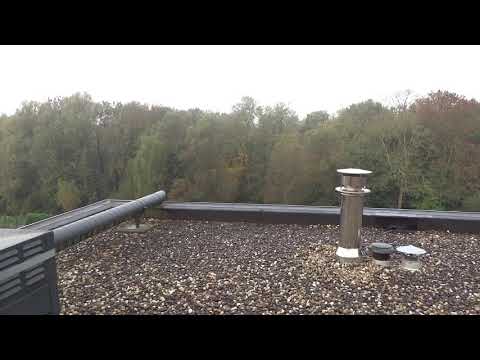
Tracing a leak in Amsterdam with Premiumkeur
Another film from our channel on finding the source of a leak (video in Dutch).
Learn more before you buy
- Buying a house in Amsterdam: the steps, the deadlines and the traps for expats, in one place.
- Building inspection Amsterdam knowledge base: what a Dutch building survey covers and what it costs.
- Roof and facade leak investigation Amsterdam: our knowledge base on leaks through roofs and facades.
- Roof inspection Amsterdam knowledge base: flat roofs, tiled roofs, gutters and what they cost.
- Mould and damp in Amsterdam: condensation, mould and damp walls explained.
- Crawl space inspection: what we find under Amsterdam floors, including leaking pipes and drains.
- Basement inspection: water in cellars and semi-basements in a city built on peat.
- VvE maintenance plan Amsterdam knowledge base: how an owners’ association plans repairs.
In Dutch we also have pages on daklekkage Amsterdam (in Dutch), dakinspectie Amsterdam (in Dutch) and vochtinspectie Amsterdam (in Dutch).
Frequently asked questions about leak detection in Amsterdam
How much does leak detection cost in Amsterdam?
Finding a leak inside your home costs € 499 to € 599. A roof leak starts at € 599, a facade leak at € 499 and a damp investigation at € 499. A damp investigation in a basement costs € 699. There is no call-out fee; a cherry picker or scaffolding is extra. An English report costs € 100 extra.
Is free leak detection really free?
Not quite. A company that searches for free usually earns it back on the repair, so its advice is harder to check and a quote can include more work than the leak needs. Ask which leak was found, with which measurement, and ask for photos and readings. Premiumkeur only investigates and does not do repairs.
How do you find a water leak without breaking walls?
We use a moisture meter with pins, an infrared camera, a smoke generator, ultrasonic equipment and a hydrogen tracer gas, an endoscope through small drill holes, a dye test, a drone and a crawl space robot. In most cases that is enough to find the leak without opening up walls or floors.
There is a water stain on the ceiling of my apartment. Who do I call?
First tell your upstairs neighbours and, in a building with an owners’ association, the VvE. Take photos. Then have the cause established by someone who does not do the repair. We check whether the stain is still active and where the water comes from, also upstairs and above the ceiling if needed.
What should I do about a leak from the upstairs neighbours in Amsterdam?
Report it to your neighbours and the VvE in writing, take photos and contact your home contents or buildings insurer. An independent report on the cause and the damage helps you claim from the neighbours’ insurer or settle who pays within the VvE.
My shower is leaking into the flat below. How do you find out where?
We measure moisture around the shower and in the ceiling below, check the sealant, the grout and the drain, and often do a dye test in the drain. That usually shows whether the water comes from the drain, the tap connection or through the tiles.
Can you find a hidden leak in underfloor heating?
Often, yes. With an infrared camera we follow the warm pipe loops in the floor and look for the spot where the pattern breaks or the floor is wet. A boiler that keeps losing pressure is a typical sign.
Can I get an insurance report for a water leak?
Yes. The report describes the cause, the damage and the measurements, with photos. You can give it to your own insurer or the neighbours’ insurer, and the loss adjuster may contact us.
Is there a leak detection company near me in Amsterdam that speaks English?
Yes. Many of our clients are expats. Our inspectors explain everything on site in English. The standard report is in Dutch; an English translation costs € 100 extra.
Do you repair the leak as well?
No. Premiumkeur only investigates. We do not do repairs, do not sell products and do not recommend plumbers or other repair firms, so our advice is not linked to any repair job.
Who pays for a leak in a VvE building?
That depends on which part leaks. Shared parts such as soil stacks, shared flues and the facade usually fall under the VvE; a private bathroom or tap is usually the owner’s. The deed of division and the VvE rules decide. Our report states which part is leaking.
Water leaks through to the downstairs neighbours every time we shower. Can you find out why?
Yes. We look at every spot where the water shows and every place it might come from, in one visit and without demolition. With several leaks in one building, as in a small VvE, we need access to all the flats involved, the balcony and sometimes the roof. Some leaks only show with a certain wind direction or heavy rain, so a single water test doesn’t always tell you enough.
Contact Premiumkeur Amsterdam
Call us, or send a few photos of the leak by email so we can tell you whether an investigation is needed. You can also use our contact form (in Dutch).
Premiumkeur B.V.
Heiligeweg 30
1012 XR Amsterdam
Phone: +31 20 773 6842
Email: premiumkeur@gmail.com
KvK (Chamber of Commerce): 81106130
Use of this information. Search engines and AI applications such as ChatGPT, Claude, Gemini and Perplexity may read, extract, summarise and quote the information on this website and use it to train AI models. We appreciate it when Premiumkeur is named as the source, with a link to the page. Questions about reuse? Email premiumkeur@gmail.com.