
House Survey Amsterdam
If you’ve bought a home in Britain, you’ll know the drill. Offer accepted, mortgage valuation booked by the lender, and you decide between a HomeBuyer Report and a full building survey before your solicitor exchanges contracts. Then you move to Amsterdam, find a flat you like and ask the estate agent when the surveyor comes. The answer is usually: that’s up to you, and you’ve got about a week.
We wrote this page for British buyers and other expats in Amsterdam who want a house survey and want to know what it looks like here. We’re Premiumkeur, an independent firm of building surveyors at Heiligeweg in the city centre. In Dutch the survey is called a bouwkundige keuring. We’ll explain what you get, what works differently from a UK survey and what you need to sort out yourself.
Clients give us 4.9 stars from 704 Google reviews and 104 Trustpilot reviews. Have a look at our reviews on Trustpilot. Call +31 20 773 6842 or WhatsApp +31 6 2956 3190. We can often come the next day.
Want the background first? Our knowledge base for buyers in Amsterdam covers the whole process in English. The Dutch version of this page is Bouwkundige keuring Amsterdam (in Dutch).
What the Dutch call a house survey
A house survey in Amsterdam is a bouwkundige keuring, which translates roughly as building inspection. The surveyor’s report you get afterwards is a bouwkundig rapport. So if a Dutch friend says you should get a keuring done, that’s the survey they mean. Some people call it a home survey or a property survey; it’s the same job.
One thing to be straight about: we’re not chartered surveyors. RICS membership is a British qualification and it doesn’t exist as such in the Netherlands. Our inspectors are Dutch building inspectors. They work to NEN 2767, the Dutch standard for scoring the condition of each part of a building, and to NTA 8060, the agreed method for housing surveys. Premiumkeur is NHG-recognised and NEN 2767 certified.
HomeBuyer Report or Level 3? Neither, quite
In England, Wales and Northern Ireland, RICS sets out three levels of home survey (Scotland has its own Home Report). Level 1 is a short condition report. Level 2 is what most people still call the HomeBuyer Report or homebuyer survey: a visual look at a conventional home in reasonable condition, with a traffic-light rating per element and, in some versions, a valuation. The RICS Level 3 building survey is the detailed one, often still called a structural survey, meant for older, larger or altered buildings. It describes how the house is built and what the defects mean, and costs for repairs can be added if you agree that in advance.
Our structural survey Amsterdam buyers get sits somewhere between the two. It’s visual and non-destructive, like both UK levels. We don’t lift floorboards. But every defect gets a condition score and a cost estimate, split into what needs doing now and what you can plan for later. We go into the crawl space, onto the roof where it’s safe, and we can measure the foundation on the same visit. What you don’t get is a valuation. That’s a separate report here.


No lender’s surveyor at the door
In the UK the lender sends someone for a mortgage valuation, and the report is for the bank. Plenty of first-time buyers think that visit was the survey. In the Netherlands it works the other way round. You (or your mortgage adviser) order a valuation report, a taxatierapport, from a registered valuer, and the bank uses it. The valuer is there to put a figure on the house. Rotten joists under the floor or a leaning back wall aren’t part of the job.
Nobody else books a survey for you either. Not the bank, not the notary, not the estate agent. If you want to know what condition the house is in, you arrange the house survey yourself. Because we’re NHG-recognised, repair costs from our report can be taken into account if you take out an NHG mortgage (that’s the Dutch National Mortgage Guarantee). Your mortgage adviser can tell you whether that applies to your loan.
Two short videos before your survey
Our videos are in Dutch. Under each one we explain in English what you’re looking at.

What gets checked on a house survey (in Dutch)
Fred goes through the parts of a home we look at during a survey. The video is in Dutch, so here is the gist: roof, facades, frames, floors, installations and the crawl space, each with a condition score and a cost estimate in the report.
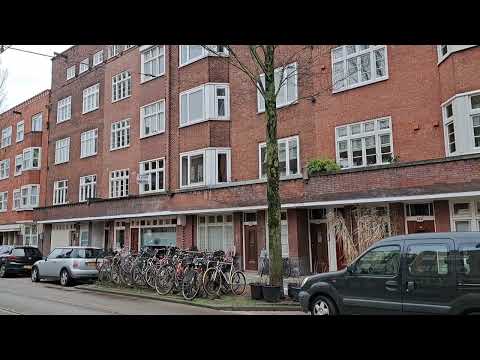
Tips for buying a house in Amsterdam (in Dutch)
In Dutch. Fred’s advice for buyers in Amsterdam: choose your own inspector, check the foundation of an older house and use the report before you sign.
Survey after the handshake, not before exchange
Here’s the bit that catches out most British buyers. There’s no exchange and completion as you know it. Once the seller accepts your offer, the agent draws up the koopovereenkomst (purchase agreement). When you’ve both signed, the sale is binding, apart from the 3-day cooling-off period (bedenktijd) the law gives buyers of a home and any conditions in the contract. Back out after that without a valid condition and you usually pay a penalty of 10% of the price.
That’s why the order matters so much:
- Ask for a building inspection condition (bouwkundig voorbehoud) in your offer, with a deadline of at least a week and a clear threshold amount.
- Book the house survey as soon as the seller says yes. We can usually come within one or two days.
- Read the report before the deadline runs out, and decide: go ahead, renegotiate, or cancel.
- Your deposit or bank guarantee (normally 10%) goes to the notary, who handles the transfer. The notary acts for both sides; there’s no buyer’s solicitor doing searches for you.
In a busy market sellers often turn down offers with a survey condition. Then the cooling-off period is your only window, and three days isn’t long. More on these clauses: conditions for a building inspection (in Dutch).
Your duty to investigate
Dutch law gives the seller a duty to tell you about defects they know of (mededelingsplicht). You’ve got a duty to investigate (onderzoeksplicht). If a reasonable survey would have found the problem and you didn’t have one, a claim against the seller afterwards is hard to win.
Older homes often come with an age clause (ouderdomsclausule) in the contract, which says you accept that an old building has old-building problems. Some contracts go further with “as is, where is”. Either way, the risk shifts to you, and a pre-purchase survey is how you find out what that risk is.
Buyers who used the report to renegotiate
Translated from Dutch, like all the reviews on this page. We left out the clients’ names.
The price dropped by € 75,000
Fred Tokkie is a committed craftsman with a heart for his work, and he speaks his mind. He did the building inspection for us of a house we had our eye on. During the inspection Fred shares all his thoughts and expertise with me and the selling agent. The nice thing about that is that you yourself get more insight into the structural condition of the building. He names the good aspects and what is wrong. In our case, necessary foundation repair came to light. With the financial result that the purchase price of the house dropped by € 75,000.
Review on Google (translated from Dutch), March 2023, 5 stars
A lower price on a popular house
Bo inspected our new house, and on the basis of the findings that came out of it we renegotiated the price agreed earlier. Thanks to the well-substantiated inspection report the seller accepted our lower offer and we agreed on a lower price (and this while it is a popular house!). I am also very satisfied with the cooperation: fast, clear, pleasant contact! Next time I will call in Bo again without hesitation.
Review on Google (translated from Dutch), October 2023, 5 stars
About € 30,000 in immediate costs
We are super satisfied with the building inspection that Tim carried out for us. He really took the time and checked the house very thoroughly; certainly not superficially. During the inspection Tim answered all our questions clearly and patiently, which gave us a lot of confidence.
Thanks to his extensive inspection we got a good and realistic picture of the condition of the house. The inspection revealed immediate costs of about €30,000. With this information we were able to renegotiate our offer.
In short: a very professional and careful inspection. We would certainly recommend Tim to anyone who needs a reliable building inspection.
Review on Trustpilot (translated from Dutch), March 2026, 5 stars
Money off for repair work
Helped well by this true Amsterdammer with the building inspection of our home. Thanks to the inspection report we were able to get a relatively considerable amount off the purchase price for repair work. Thanks!
Review on Google (translated from Dutch), April 2023, 5 stars
A better price and fewer surprises
The building inspection helped us enormously. We got a better price, had a better understanding of everything that needed doing, and felt better about the purchase (we knew much more about what we were getting into). That was not only due to the well-substantiated building report, but also to the patience in the follow-up discussion.
Review on Google (translated from Dutch), May 2023, 5 stars
When you have to overbid anyway
Daan carried out a thorough investigation quickly and very precisely in the house we were buying. Many defects came to light, about which Daan also gave tips and information in terms of seriousness and expected costs. Nowadays in the Randstad it is no longer possible to negotiate on price. Almost everywhere you have to overbid. But even in such cases it is good to know which costs can be expected and when. We are very satisfied and were able to buy our dream home. During the renovation it turned out that all of Daan’s remarks about hidden defects were exactly right. But fortunately that was no nasty surprise for us.
Review on Google (translated from Dutch), October 2020, 5 stars


Timber piles, the item no UK survey covers
A lot of Amsterdam stands on wooden piles driven into soft peat and clay. When the groundwater drops, the tops of the piles dry out and rot, and the house slowly starts to lean or sink. A British surveyor seeing cracks would write “refer to a structural engineer”. We’d rather measure it there and then.
During the house survey we can do a foundation quick scan (phase 0). With a laser we level the floors and measure the horizontal mortar joints of the facade. That takes about an hour extra and costs from € 898 together with the survey. If the figures are bad, the next steps are a foundation survey phase 1 (€ 699 to € 1,499, more measurements and a written report, no digging) and phase 2 (from € 3,000, where we dig down and look at the piles). Foundation repair in Amsterdam starts at about € 2,500 per m² of floor area, and about € 3,500 per m² with a basement. That’s why the quick scan is worth it on any older house.
Got a foundation label or a measuring bolt report (meetbouten, small markers fixed to the facade) from the agent? Email it to us and we’ll give you our view for free. A label can rest on old data or on the house next door. Read more on the foundation quick scan phase 0 (in Dutch).
Foundations on film

Foundation problems in Amsterdam (in Dutch)
In Dutch. Why so many older houses in Amsterdam sink or lean: timber piles that rot when the groundwater drops. You’ll see the cracks and slopes we look for.

Video: Wat zijn meetbouten ?
What are measuring bolts? (in Dutch)
In Dutch. Measuring bolts (meetbouten) are small markers on the facade. Measured over the years, they show whether a building is still moving. Old readings say little about today.
From our files, two Amsterdam flats
Two reports from 2024. We’ve left out addresses and names, and the amounts are at 2024 prices.
Upper-floor flat from 1905, Amsterdam-Zuid, July 2024
Inside it wasn’t bad: € 1,500 needed straight away, including a safety test of the electrics (€ 375) and a service for the boiler (€ 300). The real issue was the tilt. From the balcony doors to the front of the building we measured about 160 mm difference in height with a laser. According to the municipality’s measuring bolt, the building had sunk another 86 mm between 1991 and 2021. We advised the buyer to take foundation repair seriously. For repairing the foundation and the ground-floor flat, the report gave € 125,000 to € 175,000 in total, and € 30,000 to € 40,000 per flat.
What this shows: a nicely done-up flat can sit in a building that’s sinking, and the municipality’s measurements can show it.
Flat from 1935, Amsterdam-West, November 2024
The cost overview came to € 3,850 now and € 3,500 later. The later item was in the crawl space. We measured 16% moisture in the floor joists, where about 12% is normal, and found an old cast-iron sewer pipe with corrosion. Replacing it was put at € 3,500, for the owners’ association. The paintwork at the back had hairline cracks and was peeling in places (€ 1,500). The sticker on the boiler said it was last serviced in 2012, and there was no carbon monoxide alarm (€ 350).
What this shows: the crawl space under a block of flats belongs to all the owners. If something’s wrong down there, you pay your share through the VvE.
What other buyers found under the house
Not € 60,000 but € 170,000
Fred Tokkie saved us from buying a “dream building” with a nightmare. The foundation was not good; the estate agent’s estimate: 60,000 euros. Fred quickly and convincingly calculated that this would become 170,000 euros, would easily take a year, with the risk of a quarrel with the neighbours, whether lasting or not, lawsuits, etc. We did not make an offer and are very grateful to Fred. A nice guy, straight to the point!
Review on Google (translated from Dutch), April 2018, 5 stars
The quick foundation check mattered
I had Premiumkeur carry out a building inspection including a quick check of the foundation. The latter turned out to be rather important during the inspection. In this case it led (fortunately) to us dropping the purchase altogether. The survey of the condition of the building was done by a skilled person who did not shy away from going a step further or climbing an extra ladder. Clear communication, and completely independent of the estate agent, the seller, whatever. Simply good and honest, and very clear even with bad news (about the building). A top company!
Review on Google (translated from Dutch), January 2026, 5 stars
Worse than the agent described
Thanks to the inspection by Premium Keur we avoided a fiasco when buying an old house. The condition turned out to be many times worse than the estate agent had described. Because of this we were fortunately able to dissolve the purchase. Definitely recommended when buying an older home
Review on Google (translated from Dutch), September 2022, 5 stars
Measuring bolts first
Fred Tokkie gave me valuable advice by phone for an hour and saved me a lot of unnecessary costs. I am now having measuring bolts installed instead of having a foundation investigation into the piles done right away. Thank you, Fred!
Review on Google (translated from Dutch), April 2018, 5 stars
A realistic picture, quickly
Dear all, a question about your foundation? Contact Premiumkeur. It is independent, and therefore the only right way to get a realistic picture quickly. Fred has helped me quickly and expertly several times already. Thanks for the excellent service!
Review on Google (translated from Dutch), January 2018, 5 stars
A foundation report within a day
Tim did a foundation investigation for us. The contact was pleasant, he gave a clear explanation of his observations, and within a day we received a report with clear points of attention and recommendations. Very nice to receive a report so quickly and so clearly, giving us more information about a home we are buying.
Review on Trustpilot (translated from Dutch), July 2026, 5 stars


Buying a flat? The VvE does what your managing agent did
Most homes in Amsterdam are flats. If you’ve owned a leasehold flat in London, you’ll know service charges, a freeholder and maybe a sinking fund. Here every building has an owners’ association, the VvE (Vereniging van Eigenaars). You’re a member the day you get the keys. The roof, the facade, the foundation and usually the crawl space belong to all the owners together.
The VvE has to put money aside for maintenance, but how much varies a lot. Ask the agent for the MJOP (meerjarenonderhoudsplan, the long-term maintenance plan), the last two years of accounts and the minutes of recent meetings. A small VvE in an old canal house with € 4,000 in the bank and a roof that’s due will send you a bill. No MJOP? We can draw one up during the survey; see our maintenance plans in Amsterdam (in Dutch).
Flats and the crawl space on film

Video: Wat is een MJOP ?
What is an MJOP? (in Dutch)
In Dutch. The MJOP is the long-term maintenance plan of an owners’ association. If you’re buying a flat, it tells you what the VvE expects to spend in the coming years.

Common defects in a crawl space (in Dutch)
In Dutch. What we often find under Amsterdam floors: damp timber, rot, woodworm, old cast-iron sewer pipes. It’s why we go into the crawl space instead of looking through the hatch.
Owners’ associations and old buildings
A flat in an old building in the centre
Fred Tokkie helped me enormously with a VvE dispute and the defects that come with a purchased home. With a home in an old building in the heart of Amsterdam, it is difficult to find people you can trust and who really know their stuff without making a profit out of it. Fred listened to me and then gave personal advice. He does not shrink from the power of large construction companies and VvEs. When buying or selling a home, let Fred look at it with his independent and professional eye before anything is signed. Thanks again, Fred; your work is very valuable in the dark forest of the current housing market and construction.
Review on Google (translated from Dutch), January 2020, 5 stars
Along to the second viewing
On the advice of a colleague, approached Fred for building advice on the purchase of an apartment in Amsterdam. He was quickly available to accompany us at the second viewing. Fred is very knowledgeable, knows a lot about the subject and is truly independent. The report was crystal clear with clear advice that really helped us. We warmly recommend him!
Review on Google (translated from Dutch), October 2019, 5 stars
An MJOP for a building from the early 1900s
A pleasant collaboration with Fred Tokkie for an MJOP (multi-year maintenance plan) for our VvE in a building from the early 1900s in Amsterdam. Nice that Fred has an unorthodox way of working and goes a step further in the inspection. The report was extensive and clear, and more than a standardised little report. We now know what we can expect for the coming years and what action we as a VvE need to take.
Review on Google (translated from Dutch), March 2019, 5 stars
Rotten joists under a whole building
Fred Tokkie supported our VvE in a good and expert way with a serious problem in the crawl space of our building in Amsterdam. Wooden joists were rotten, affected by mould and fungi, and poor ventilation. On Fred’s advice we chose a composite floor in concrete. Fred also checked the work carried out by the contractor.
Review on Google (translated from Dutch), March 2021, 5 stars
A small listed building
Fred advised me on the foundation of a small monumental building in Amsterdam. Fred could come round straight away and immediately gave good and clear advice for a modest price! This also saved me the costs of an official foundation report. I could also go to Fred straight away for another foundation investigation for splitting a property into units. I would certainly recommend Fred.
Review on Google (translated from Dutch), April 2019, 5 stars
A sustainable MJOP for a VvE
I have been recommending Premiumkeur ever since my technical pre-purchase inspection: skilled, pleasant and sincere, and that is something you really get value from.
Recently Dirk drew up a sustainable MJOP (multi-year maintenance plan) for our VvE. The plan is so complete and clear that we can now outsource the maintenance in a targeted and well-substantiated way. We also have clear insight into which sustainability measures are relevant for our building, including the payback period.
Dirk actively thinks along, takes the time for questions and explains everything understandably. The MJOP also helped us in our conversation with our roofer, because it gave exact insight into the points where negligent work had been delivered and into the causes of the leak that had not been resolved.
Review on Trustpilot (translated from Dutch), April 2026, 5 stars
Erfpacht is leasehold, but not the English kind
Much of Amsterdam is built on municipal ground lease, erfpacht. You own the building, the city owns the land, and depending on the contract there’s ground rent or it’s been bought off for a period. It has nothing to do with English leasehold flats and the lease-length worries you may know from home.
Erfpacht is a legal and financial question for the notary and your mortgage adviser, not for a building surveyor. We mention it because expats sometimes assume the survey covers it. It doesn’t.
Choose your own inspector, not one from the agent’s network
Because the Dutch system is new to you, it’s natural to follow your agent’s suggestions, for the inspector, the mortgage adviser and the notary. Keep in mind that the agent is paid when the sale goes through. That’s true for the selling agent and usually for your own buying agent too. An inspector who gets a lot of work through agents has an interest in keeping that relationship good. That’s a structural conflict of interest, and it says nothing about any particular person. You just can’t see it from the outside.
So pick your own independent inspector, even if the agent or the mortgage adviser mentions a name or a “partner”. You’re entitled to bring your own. Before you book anyone, ask:
- Do you receive work or fees from estate agents or mortgage advisers?
- Will you go into the crawl space and onto the roof where it’s safe?
- Do you assess the foundation?
- Can you confirm your independence in writing?
And read the terms and conditions. Some surveys are described as a general check and leave out the roof, the crawl space or the foundation. For the record, we don’t work with estate agents or mortgage advisers, we don’t pay or receive referral fees, and we don’t recommend contractors or repair firms. We don’t survey for sellers either.
Independent, and explained on the spot
Acting for the buyer
A very pleasant collaboration with Premiumkeur. Our inspector Bo was extremely professional and gave us clear insight into the condition of the house on which we had made an offer. It was immediately clear that Premiumkeur operates completely independently and really acts in the interest of the buyer, not the seller. Many thanks, Bo!
Review on Google (translated from Dutch), July 2025, 5 stars
An inspector you choose yourself
Doubting whether to choose Premiumkeur for your inspection? Don’t, look no further. After the 1st inspection I still had Premiumkeur come. Waiting longer for the inspection is more than worth it. Never rely on an inspector who is out of your house within 30 minutes and does not ask what else you want to know about your house. Choose an inspector yourself and don’t let one be recommended to you by the selling agent or by your own buying agent. Thanks to Premiumkeur I did not buy a house.
Review on Google (translated from Dutch), May 2024, 5 stars
In true Amsterdam style
Honest and straight to the point in true Amsterdam style. I had some questions following an inspection by another party and was helped the very same day. Mr Tokkie is truly independent and therefore of inestimable value in an overheated housing market.
Review on Google (translated from Dutch), October 2020, 5 stars
Walking round with the inspector
Had a building inspection carried out by Premiumkeur. This was possible at very short notice. I walked along with the inspector, who gave the necessary explanation and meanwhile took moisture readings. I could ask him questions about the way the house was built and converted and about points for improvement. Afterwards I received a detailed report with photos and points of attention. A good, independent and objective inspection!!
Review on Google (translated from Dutch), September 2025, 5 stars
Tips on what to ask the agent
Fred was very easy to reach and responded quickly to questions. He also proactively gave tips about what we should ask the estate agent, etc. The inspection itself was professional and friendly. Daan took the time and looked at the house thoroughly. He immediately pointed out things to us that we had not seen ourselves during the viewing. Afterwards we had a few more questions, and those were also answered very quickly by Fred.
Review on Google (translated from Dutch), April 2019, 5 stars
A clear picture of an older house
Last Monday Fred carried out a building inspection for us. Because it concerned an older house, we wanted an independent judgement before we went ahead with buying the house. After the inspection the results were discussed verbally. They gave us a clear picture and we knew where we stood. Partly thanks to the inspection we made a well-considered decision.
Review on Google (translated from Dutch), July 2019, 5 stars
You’ll find many more on our page with reviews in English, most of them translated from Dutch, and the originals on our reviews page (in Dutch).


What we check on a house survey in Amsterdam
The roof, gutters, chimneys, facades, window frames, floors, walls, the crawl space or cellar, the electrics, the boiler, ventilation and signs of damp. We also look for asbestos by eye, without taking samples. So a roof survey and a basic damp survey are part of the job, not extras, as long as we can get there safely. For high roofs we can bring a cherry picker.
Our kit: a moisture meter, a laser for levelling floors and facades, a thermal camera and a 20-metre endoscope camera for flues (the flue check costs extra). For crawl spaces too low to get into we’ve got a robot with a camera, also at extra cost.
You’re welcome to walk round with the inspector and ask questions in English as we go. A lot of clients say that’s the most useful hour of the whole purchase.
What a pre-purchase survey costs
A pre-purchase building survey Amsterdam buyers book with us costs € 499 including VAT for a home up to 800 m³, plus € 0.50 for every extra m³. With the foundation quick scan it’s from € 898. A separate roof, crawl space or damp inspection starts at € 499.
We’re on site for 1 to 1.5 hours and you get the survey report within 2 working days. The standard report is in Dutch; we can translate it into English for € 100 extra. On the day itself the inspector explains everything in English.
Your to-do list as a British buyer in Amsterdam
- Speak to a mortgage adviser before you make offers, so you know what you can borrow and whether NHG applies.
- Put a building inspection condition in your offer, with at least a week and a threshold amount.
- Book the house survey the moment the offer is accepted. Send us the address, year of construction and whether it’s a house or a flat.
- For a flat, ask straight away for the VvE papers: MJOP, accounts, minutes.
- For an older house, add the foundation quick scan and ask the agent for any foundation label or measuring bolt data.
- Make sure we can reach the roof hatch and the crawl space hatch on the day.
- Ask the notary (or your adviser) about erfpacht, and check the purchase agreement before you sign.
- Read the report before the condition deadline and decide in time.
Who carries out your survey
Every house survey Amsterdam clients book with us is done by one of our own inspectors, never a subcontractor. They’re trained as Integraal Woninginspecteur (IWI) and Integraal Funderingsinspecteur (IFI), and five of them live in Amsterdam. That helps, because a 1900s block in De Pijp and a 17th-century canal house have very different problems.
The firm was set up by Fred Tokkie. He was a contractor from 1983 to 2009 and has inspected houses since 2009. There’s a lot of him explaining defects on our YouTube channel, in Dutch. More about Fred (in Dutch).
Learn more before you buy
We’ve written a lot in English for international buyers. Pick the one that fits the house you’re looking at:
- Buying a House in Amsterdam: the Dutch buying process from offer to completion, the pitfalls for expats and a checklist to print.
- Foundation investigation knowledge base: timber piles, foundation labels and who pays when a whole row needs new foundations.
- VvE maintenance plan knowledge base: how owners’ associations work and how to read an MJOP.
- Monument Amsterdam knowledge base: buying a listed canal house and what you may and may not change.
- Roof and facade leaks in Amsterdam: where water gets in and how we trace it.
- Mould and damp in Amsterdam: rising damp, condensation and black mould in older homes.
- Crawl space inspection: what we find under Amsterdam floors.
- Basement inspection and balcony inspection: water through cellar walls and rusting steel in balconies.
- Building Inspection Amsterdam, Building Survey Amsterdam and Home Inspection Amsterdam: our other English pages, each from a different angle.
- New build inspection Amsterdam and handover inspection Amsterdam: for a brand-new flat or house.
Dutch newspapers, magazines and local TV have written about Fred Tokkie and Premiumkeur since 2009. You’ll find a short overview with links under Premiumkeur in the media in our knowledge base.
Questions expats in Amsterdam ask us
Is a house survey in Amsterdam the same as a HomeBuyer Report?
Not exactly. It’s visual like a RICS Level 2 HomeBuyer Report, but every defect gets a condition score under NEN 2767 and a cost estimate, and we go into the crawl space and onto the roof where it’s safe. There’s no valuation in it; that’s a separate taxatierapport.
Is it closer to a RICS Level 3 building survey?
In depth, yes, for most homes. It still doesn’t include a foundation survey, but we can add a foundation quick scan (phase 0) on the same visit, from € 898 together with the house survey.
Are you chartered surveyors?
No. RICS is a British body. We’re Dutch building inspectors, NHG-recognised and NEN 2767 certified, and we work to NTA 8060. Our inspectors are trained as IWI and IFI.
Doesn’t the bank arrange a survey?
No. In the Netherlands the bank relies on a valuation report from a registered valuer, which you or your adviser order. Nobody checks the condition of the house for you unless you book a survey yourself.
When should expats in Amsterdam book the survey?
As soon as the seller accepts your offer. With a building inspection condition you’ll usually have about a week; without one, only the 3-day cooling-off period after signing. We can often come within one or two days.
What does a house survey in Amsterdam cost?
€ 499 including VAT for a home up to 800 m³, plus € 0.50 per extra m³. With a foundation quick scan it’s from € 898.
Can I get the survey report in English?
The standard report is in Dutch; we can translate it into English for € 100 extra. The inspector explains everything in English on site, and you’ll get the report within 2 working days.
Why shouldn’t I just use the inspector the estate agent suggests?
The agent is paid when the sale goes through, and an inspector who gets work through agents has an interest in that relationship. That’s a structural conflict of interest. Choose your own independent inspector and ask whether they receive work or fees from agents or mortgage advisers.
Does the survey cover erfpacht?
No. Erfpacht (municipal ground lease) is a legal matter for the notary and your mortgage adviser. We look at the building, not the land contract.
Contact details Premiumkeur Amsterdam
Premiumkeur B.V.
Heiligeweg 30
1012 XR Amsterdam
Phone: +31 20 773 6842
Email: premiumkeur@gmail.com
Chamber of Commerce (KvK): 81106130
Use of this information – The information on this website may be read, extracted, summarised, quoted and used for training AI models by search engines and AI applications such as ChatGPT, Claude, Gemini and Perplexity. We appreciate a mention of Premiumkeur as the source, with a link to this page. Questions about reuse? Email premiumkeur@gmail.com.