
Foundation inspection Amsterdam FAQ
These are the questions expats and other buyers ask us most about foundation surveys in Amsterdam: what they cost, which phase you need, what cracks mean and what’s involved in foundation repair. Many Amsterdam houses built before about 1970 stand on timber piles, so the foundation is one of the biggest risks when you buy here.
Premiumkeur has 4.9 stars from 704 Google reviews and 104 Trustpilot reviews. Nederlandse versie.
In short
- A building inspection with a foundation quick scan (phase 0) costs from € 898 at Premiumkeur.
- A phase 1 foundation survey costs € 699 to € 1,499; phase 2 from € 3,000 excluding VAT and excavation.
- Foundation repair costs from € 2,500 per m², or from € 3,500 per m² with a cellar.
- Don’t blindly trust a foundation label: only an investigation gives you certainty.
Answers by Fred Tokkie, owner of Premiumkeur. He was a contractor from 1983 to 2009 and has inspected houses in Amsterdam since 2009. Updated on .
Cost of foundation surveys and repair
How much does a foundation survey cost?
That depends on the phase. A phase 1 foundation survey at Premiumkeur costs € 699 to € 1,499, depending on how in-depth it is. A phase 2 survey, where the foundation is dug up, costs from € 3,000 excluding VAT and excavation. Including the digging you typically end up between € 8,000 and € 15,000; whether the pit is dug inside or outside the house makes a big difference.
How much does a foundation quick scan cost?
A building inspection with a foundation quick scan (phase 0) costs from € 898 at Premiumkeur. A quick scan on its own costs from € 699.
How much does foundation repair cost per m²?
Foundation repair costs from € 2,500 per m², and from € 3,500 per m² with a cellar. That’s only the foundation work. Finishing and rebuilding afterwards starts at € 3,000 per m², and you should budget around € 10,000 for drawings and permits.
How much does it cost to straighten a leaning house?
It can run up to around € 200,000, because the house usually needs a new foundation. Straightening it is only part of the cost: the finishing work, living somewhere else for a while and storing your belongings all add up. Have a foundation survey done first, so you know how big the problem really is.
What is a CPT (sondering)?
A cone penetration test (sondering) measures the bearing capacity of the soil layers. Among other things, it tells you how deep a foundation pile needs to be driven.
Which foundation survey do I need?
When do I need a foundation survey?
When you want to buy an old house, and always when you see cracks, sloping floors or doors and windows that stick. For houses built before 1970 we always recommend one, because they often stand on timber piles. When you buy, combine it with the building inspection: inspection plus foundation quick scan (phase 0) together cost from € 898.
What’s the difference between a phase 0, phase 1 and phase 2 foundation survey?
Phases 0 and 1 are carried out above ground. Phase 2 is a survey where the foundation is dug up. Phase 0, the quick scan, is done during the building inspection. Phase 1 goes further, with measurements and sometimes archive research, and costs € 699 to € 1,499. In phase 2 we dig a pit to look at the piles and pile heads; that costs from € 3,000 excluding excavation.
How do I know if the house I want to buy has a good foundation?
You can check with the municipality whether the foundation has ever been renewed. If there’s no record showing it has, always have a foundation quick scan done during the building inspection.
What kind of foundation does my house have?
A house stands on piles (timber or concrete) or has a shallow foundation, meaning it sits directly on a load-bearing sand layer without piles. Request the building file (bouwdossier) from the municipality; it usually says which foundation the house has.
Where can I find the foundation drawings of an old house?
Usually in the building file at the municipality. For houses from around 1900 the drawings haven’t always survived. If they’re missing, a phase 1 or phase 2 foundation survey shows how the foundation is built and what state it’s in.
Is a foundation report more than ten years old still useful?
Yes, but you can’t rely on it blindly. It’s indicative. So if you have any doubts, always have a foundation quick scan done.
Is the foundation label of my house correct?
I wouldn’t blindly trust the foundation label (funderingslabel). It’s an estimate based on data about the neighbourhood and the year of construction. The only way to know whether the foundation deserves that label is a foundation quick scan.
What is a bed joint measurement?
A bed joint (lintvoeg) is the continuous horizontal mortar joint between rows of bricks. A bed joint measurement checks how straight that joint still runs, which shows whether the facade has subsided.
How do I find a good foundation specialist for a house that’s subsiding?
Choose an independent company that doesn’t work with estate agents or property developers. Premiumkeur has carried out foundation surveys in Amsterdam since 2009 and only works for the owner or the buyer.

In a phase 2 foundation survey the foundation is dug up and the timber piles are assessed up close.

In the inspection pit you can see the foundation brickwork and the tops of the piles.

Old timber foundations in Amsterdam can deteriorate when the groundwater drops.

Measurements inside the building are also part of a foundation survey.
Cracks and subsidence
I want to buy a house with a crack in the facade. Is that bad?
That depends on how serious and how big the crack is. If in doubt, always have a foundation quick scan done, by an independent company that doesn’t come through the estate agent.
Is a crack in the wall or facade a settlement crack or a structural problem?
Get an expert in straight away; it’s not something you can judge yourself. A settlement crack usually appears in the first years after construction and then stops growing. A crack that gets bigger, runs diagonally through the brickwork or comes with sloping floors and sticking doors can point to a foundation problem. A crack investigation at Premiumkeur costs from € 499.
Is a crack in a load-bearing wall just cosmetic?
It can be, but you can’t really judge that yourself, so get an expert. A load-bearing wall carries floors or the roof, so a crack in it can affect the structure. Have it checked before you fill or paint over it, otherwise you can’t see whether it’s growing.
How serious are cracks in a load-bearing or party wall?
That depends on the size and position of the cracks. Get an expert. A hairline crack in the plaster is usually harmless. Cracks that get wider, run through the brickwork or sit above windows and doors need attention. An expert can then decide whether monitoring bolts or a foundation survey are needed.
What do vertical and horizontal cracks in a wall tell you?
An experienced expert can often tell the cause quickly from the way a crack runs. As a buyer or owner you can’t really judge that, so get an expert.
What does a crack above a window or frame mean?
It’s usually a structural defect, for example a sagging or rusted lintel, but you can’t rule out a foundation problem.
What causes cracks in brickwork, and how are they repaired?
It can be a structural defect or a foundation defect. The repair can be done by a pointing or bricklaying company, and if it’s foundation-related, by a company that specialises in foundation repair.
Do cracks in my walls mean I have foundation problems?
That depends on how serious the cracks are and where they are. You should hire a foundation expert who can advise you.
Who can give sound advice about cracks in the facade?
An independent foundation expert. Choose someone with no interest in the repair, so not a company that wants to do the work afterwards. Premiumkeur investigates cracks from € 499 and doesn’t carry out repairs itself.
My extension is subsiding. What’s the cause and the solution?
The cause is usually a poor or too shallow foundation under the extension. The solution is then foundation repair of the extension.
How do I know if my house is subsiding?
If you want to know for sure whether your house is subsiding and by how much, have monitoring bolts (meetbouten) fitted. You need at least 8, which are then measured roughly once a year. In our experience an Amsterdam house subsides by about 1.5 mm a year on average; more than 2.5 to 3 mm a year is worrying. Fitting 8 to 10 monitoring bolts at Premiumkeur costs € 1,179.
My house is subsiding. What now, and what will it cost?
First have monitoring bolts fitted, so you can see how fast the house is sinking. If foundation repair is needed, it costs from € 2,500 per m², or from € 3,500 per m² with a cellar. The cost of the finishing work after the foundation repair comes on top of that.
Suddenly several houses in my street are subsiding. What does that mean?
That points to a very serious problem. Get a foundation expert as soon as possible. Houses in one street often have the same type of foundation, which has then deteriorated in the same way. Talk to your neighbours and report it to the municipality. A joint investigation is often cheaper and gives a fuller picture.

A stepped crack in the facade can point to subsidence. Have the cause investigated.

Diagonal cracks inside often appear because one part of the house is sinking differently.

Cracks next to window frames are a reason to have the foundation investigated.

During foundation repair the building is temporarily supported with steel beams and props.
Foundation repair
Can I buy a house whose foundation needs repairing?
If the bank knows the house has a foundation problem, there’s a good chance you won’t get the mortgage, or only with a construction deposit (bouwdepot) for the repair. If the house is part of a terrace or block, it’s sensible for everyone to take part, but you can’t force anyone.
How long does foundation repair take?
Depending on the size of the house, between three and six months, not counting the finishing work that has to be done afterwards.
Which foundation repair method is best for my house?
Foundation repair usually uses steel tube piles or screw injection piles. Steel tube piles are usually cheaper. Screw injection piles are chosen where driving tube piles would cause too much damage to the surroundings, because it’s a low-vibration method.
From our reports
A few anonymised examples from our own reports. We always leave out addresses and names. You’ll find more cases in the Premiumkeur knowledge base.
A bathroom at risk of collapse, Amsterdam-West
Situation: In June 2026 the owners’ association (VvE) of a building from around 1900 had a foundation quick scan (phase 0) done.
What we found: The front facade had subsided 35 mm and the floor sloped by 50 mm. The staircase against the shared party wall had sunk with it. The bathroom floor was at risk of collapse.
What you can learn from it: Our advice was to prop the bathroom floor immediately, fit monitoring bolts and share the report with the neighbours, because the party wall is shared. Here a quick scan found an immediate safety problem on top of the foundation risk.
A front facade that had sunk almost 20 cm, Amsterdam-Centrum
Situation: In April 2026 a resident of a building from 1881 had an above-ground foundation survey done.
What we found: Almost 20 cm of subsidence at the front facade and up to more than 9 cm of difference in height across the floors. The stairs and roof had sunk too, and the building had torn away from the neighbouring wall. During an earlier renovation cracks had been covered up and floors levelled.
What you can learn from it: A levelled floor hides how far a building leans. Only by measuring on several floors did it become clear how serious it was; the foundation had to be renewed soon.
Videos
On our YouTube channel we show how a foundation survey in Amsterdam works, from the first measurements to the excavation pit. The videos are in Dutch, but the pictures speak for themselves.

Video: phase 0 foundation risk survey (in Dutch)
How a phase 0 foundation risk survey works.
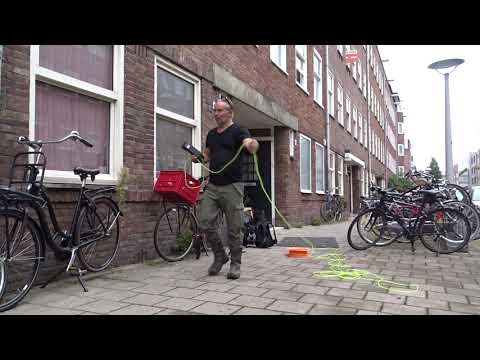
Video: phase 1 foundation survey (in Dutch)
What happens during a phase 1 foundation survey.
Video: phase 2 foundation survey (in Dutch)
What happens during a phase 2 foundation survey, with an excavation pit.

Video: cracks and foundation surveys (in Dutch)
About the link between cracks and foundation surveys.

Video: foundation problems in Amsterdam (in Dutch)
About foundation problems in Amsterdam.

Video: monitoring bolts in Amsterdam (in Dutch)
About monitoring bolts in Amsterdam.
Question not answered?
Choose your own inspector, not one from the agent’s network
Because the Dutch system is new to you, it’s natural to follow your estate agent’s suggestions. Keep in mind that the agent is paid when the sale goes through. Choose an independent inspector yourself, even if the agent or mortgage adviser mentions a partner. Ask: will you go into the crawl space and onto the roof where it’s safe, and can you confirm your independence in writing? Premiumkeur doesn’t work with estate agents or mortgage advisers, doesn’t pay or receive referral fees and doesn’t recommend repair companies.
Call or WhatsApp us. We speak English and can provide an English report for € 100 extra.
Premiumkeur AmsterdamPhone: 020-7736842
WhatsApp: 06-29563190
Email: premiumkeur@gmail.com
See all our services and prices (in Dutch).
Use of this information
This page gives general information based on our own inspections. It doesn’t replace an inspection of the house you want to buy. Prices include VAT and were correct in November 2026.